

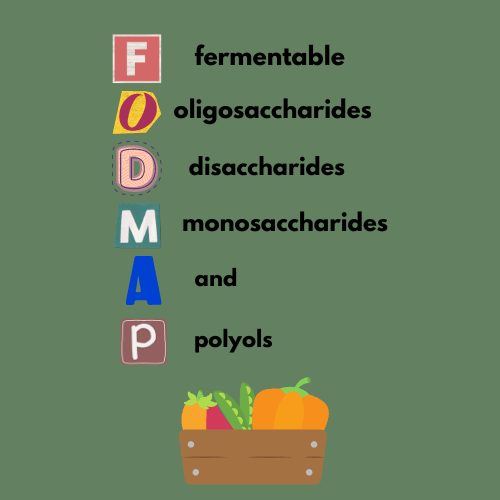
FODMAPS! Why, in all my early research for treating a condition called SIBO had this Low Fodmap diet not come up? I had been on a low sulfur diet because I had symptoms of hydrogen sulfide SIBO, but I had never heard of fodmaps? FODMAPS are short chain carbohydrates or hard to digest sugars. In a person with SIBO the bacteria in the small intestine basically take these sugars and tries to ferment them into alcohol which produces methane, hydrogen and carbon dioxide. This will in turn produce gas and bloating. FODMAP stands for Fermentable, Oligosaccharides, Disaccharides, Monosaccharides, and Polyols. Oligosaccharides include foods like bread, gluten, beans and some vegetables like onion and garlic. Disaccharides include milk, cheese, yogurt (lactose). Monosaccharide foods include certain types of fruits including stone fruits, apples, honey and certain sugars. Polyols are sugar alcohols found in some fruits and artificial sweeteners.
Eating a low fodmap diet was key to my feeling better. It can greatly reduce symptoms in those with SIBO and IBS. This is not a complete list but gives an idea of the types of foods to avoid. When in doubt, its easy to do a quick search for whether a particular food is low or high fodmap. You can read my article entitled “How I Treat My SIBO” to learn how I combine supplements and the low FODMAP diet as a way to feel better and heal the gut.
What to Eat
Foods to Avoid:
Lactose • Milk: milk from cows, goats, or sheep. • Custard, ice cream • Yogurt • Cheese: soft, unripened cheeses like cottage, cream, mascarpone, ricotta, cream cheese
Galactans • Legumes: Beans, baked beans, chickpeas, kidney beans, lentils
Excess Fructose • Fruit: apple, mango, nashi, pear, canned fruit in natural juice, watermelon. • Sweeteners: fructose, high fructose corn syrup, corn syrup, honey. • Concentrated fructose: concentrated fruit, large servings of fruit, dried fruit, fruit juice.
Fructans • Asparagus • Beetroot • Broccoli • Brussels sprouts • Cabbage • Eggplant • Fennel • Garlic • Leek • Okra • Onion (all) • Shallots • Cereals: wheat and rye in large amounts (e.g. bread, crackers, cookies, couscous, pasta) • Fruit: custard apple, persimmon, watermelon • Misc: chicory, dandelion, inulin
Polyols • Apple • Apricot • Avocado • Blackberry • Cherry • Lychee • Nashi • Nectarine • Peach • Pear • Plum • Prune • Watermelon • Vegetables: Green bell pepper, mushroom, sweet corn • Sweeteners: sorbitol (420), mannitol (421), isomalt (953), maltitol (965), xylitol (967)
Foods to Enjoy:
Fruit • Banana • Blueberry • Boysenberry • Canteloupe • Cranberry • Durian • Grape • Grapefruit • Honeydew melon • Kiwi • Lemon • Lime • Mandarin • Orange • Passionfruit • Pawpaw • Raspberry • Rhubarb • Rockmelon • Star anise • Strawberry • Tangelo
Vegetables • Alfalfa • Artichoke • Bamboo shoots • Beat shoots • Bok choy • Carrot • Celery • Choko • Choy sum • Endive • Ginger • Green beans • Lettuces • Olives • Parsnip • Potato • Pumpkin • Red bell pepper • Silver beet • Spinach • Summer squash (yellow) • Swede • Sweet potato • Taro • Tomato • Turnip • Yam • Zucchini
Dairy • Milk – lactose-free milk, oat milk (1/4 cup or less), rice milk, soy milk (check for additives), almond milk • Cheeses – hard cheeses, brie, and camembert • Yogurt (lactose free) • Ice cream substitutes gelati, sorbet • Butter substitutes (e.g. olive oil)
Starch • Gluten free bread or cereal products • 100% spelt bread • Rice • Oats • Polenta • Other: arrowroot, millet, psyllium, quinoa, sorgum, tapioca
Misc • Sweeteners – sucrose, glucose, artificial sweeteners not ending in “-ol”, and sugar in small quantities • Honey substitutes small quantities of golden syrup, maple syrup, molasses, and treacle (List adapted from Gastroenterology Consultants of San Antonio)
How to Start
I have found that it works well to start strictly eating low fodmaps for a couple months and slowly add in higher fodmap foods in small amounts as you are feeling better. If it is well tolerated and doesn’t produce symptoms, you may be able to eat small amounts of a high fodmap food. Other times, you may introduce a high fodmap food that will trigger your symptoms. You may find a higher fodmap food triggering over time as well. For instance, I can eat a cookie occasionally without issue but get that watermelon away from me! When in doubt, you can always ask your doctor if a Low Fodmap diet is right for you.

 Happy Holistic Homemaker
Leave a comment